Textile history · Bedding materials
How to Assess a Mattress Topper’s Fiber, Loft, and Construction
A mattress topper can look simple from the outside: a soft layer placed between sleeper and mattress. But beneath its cover, fiber, density, and construction determine how that layer holds warmth, responds to pressure, and changes with use. Learning to read those details turns a bedding choice into a small study of textile knowledge—one that links the structure of wool to the feel of a modern bed.
Published October 24, 2026
Begin with the material, not the thickness
When comparing mattress toppers, thickness is an inviting first measurement. It is visible, easy to compare, and often presented as shorthand for softness or cushioning. Yet two toppers of identical thickness may feel very different. One might be filled with resilient wool fibers held in a quilted grid; another could contain a dense, continuous layer of foam. The distance from the mattress to the surface tells only part of the story. What matters just as much is what fills that distance, how much of it there is, and how it has been arranged.
Think of a topper as a small textile landscape. Its fibers create spaces; its filling compresses and rebounds; its cover contains the whole structure. A sleeper’s weight presses these elements into motion through the night. In response, they bend, shift, trap air, and exchange moisture with the surrounding environment. Examining these actions helps explain why fiber type, fill density, and construction deserve attention alongside loft.
For wool mattress toppers, the first question is not simply whether the label says “wool.” Look for more precise details: what part of the fleece is used, whether the wool is blended with other fibers, how the filling is processed, and whether the maker describes its weight or density. Such information offers a better basis for comparison than broad claims about comfort or natural performance.
A fiber made to hold air
Wool’s familiar warmth begins with its structure. A wool fiber is not a smooth, rigid filament. It has a natural crimp, or waviness, that gives it spring. In a loose filling, neighboring fibers can create many small spaces in which air is held. These air pockets slow the movement of heat, helping a wool layer feel insulating without requiring every part of the filling to be tightly packed.
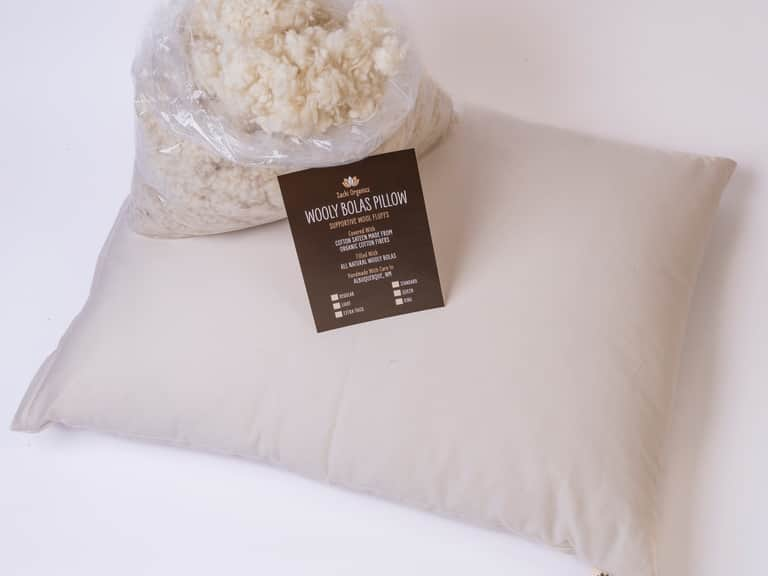
The result depends on more than the word “wool.” Fiber length, fineness, cleanliness, and preparation all influence how a filling behaves. Carding—a process that disentangles and aligns fibers into a soft web—can help form an even batting. That batting may then be layered, compressed, stitched, or otherwise secured inside a cover. Small differences in preparation can affect how readily a topper conforms, how evenly it distributes its fill, and how it recovers after pressure.
Wool can also take up moisture vapor from the surrounding air. This property is one reason wool textiles have long been valued in environments where comfort depends on managing both warmth and dampness. It does not mean that wool makes a bed dry under every condition, nor does it replace ventilation or appropriate bedding care. Rather, it describes a material that can interact with moisture as part of the changing microclimate around the sleeper.
Fiber qualities should be understood as tendencies, not guarantees. A wool topper’s actual feel depends on its construction, weight, cover, and the mattress beneath it. A resilient wool fill in a firm, tightly controlled structure may feel quite different from a loosely filled, plush layer, even if both use similar fibers.
Loft: the space between surface and support
Loft describes the height or fullness of a filling. In a topper, it is tempting to treat greater loft as a direct route to greater softness. But loft is not the same as softness, and neither one tells the whole story about support. A lofty layer may compress substantially under a sleeper. A lower-profile filling may feel firmer if its fibers are more densely packed or its quilting holds them in a tighter structure.
Useful product descriptions distinguish, where possible, between finished thickness and the amount of filling. The first gives a measurement of the assembled topper; the second helps reveal how much material creates that measurement. If a manufacturer provides fill weight per size or area, that can help compare products with similar dimensions. If those details are absent, consider asking the maker for them rather than relying on an adjective such as “plush.”
Loft changes under use. Fibers are compressed by body weight, and filling can shift gradually if it is not held in place. Wool’s natural resilience helps it spring back to some extent, but no fiber remains untouched by repeated pressure. The practical question is how evenly the layer responds and whether the design is intended to maintain an even surface over time.
It is also important to consider the mattress as part of the system. A topper adds a layer; it does not necessarily correct every underlying problem. A thick, soft topper placed on a mattress that already sags may not restore even support. Likewise, a thin wool layer may add a modest cushion and change the bed’s surface feel without transforming the structure below. Matching loft to the condition and firmness of the mattress is more useful than assuming that “more” is automatically better.
Density and fill distribution
Fill density concerns how much fiber occupies a given volume or area. It shapes the balance between give and resistance. Lower-density filling may feel airier, with more room for fibers to move. Higher-density filling may feel more substantial, although the final sensation also depends on fiber type, quilting, and the cover. Density is therefore a useful clue, but not a stand-alone verdict.
One practical way to assess a topper is to ask whether its filling is likely to remain evenly spread. Wool fibers can be arranged as batting or another prepared filling, then secured by stitching or quilting. If the fill is allowed to migrate, some areas may become thinner while others grow fuller. This unevenness can alter the surface and make one part of the bed feel unlike another.
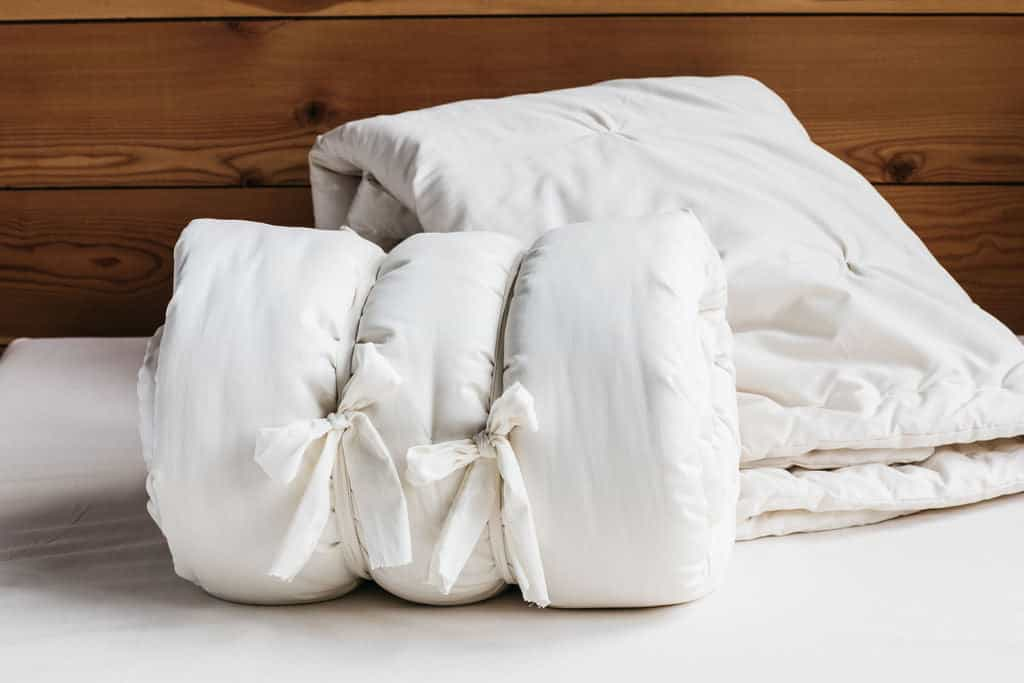
Quilting divides a topper into smaller sections, helping limit large-scale movement. The size and pattern of those sections matter: closely spaced stitching may restrain the filling more firmly, while larger channels may leave more room for it to shift. Neither approach is inherently best. A highly controlled pattern can promote consistency; a more open arrangement may preserve a looser, less segmented feel. What matters is whether the construction suits the intended use and whether the maker explains how the filling is secured.
Inspect the seams and the edges, too. Consistent stitching and well-finished binding can help contain the filling and reduce stress on vulnerable points. Look for signs that the cover is designed to handle regular turning, fitting, and laundering if washing is permitted. These details rarely make a dramatic first impression, but they can determine how well a textile layer holds together in daily life.
Read the cover as part of the construction
The shell is not a decorative afterthought. It contains the filling, contributes to the surface feel, and affects how air and moisture move through the topper. Cotton is a common natural-fiber choice for bedding covers; other materials may also be used. Pay attention to the fiber content, weave, and any coatings or treatments that are disclosed. A tightly woven cover can help keep loose fibers contained, while its hand—the way it feels to the touch—will influence the first impression of the bed.
Construction is the meeting point between shell and fill. A topper with a substantial filling still depends on its cover and seams to keep that filling in place. If the product description explains how the cover is assembled, whether it is quilted through both layers, and how the edges are finished, the shopper has more to work with than a simple thickness figure.
Fit belongs in the same assessment. Check the topper’s dimensions against the mattress and note how it is meant to stay put. Some designs rely on their size and weight; others may include straps, elastic, or another attachment method. A layer that shifts repeatedly can be uncomfortable regardless of the quality of its fibers. The mattress depth, fitted sheet size, and any added protector may also affect how securely the whole bed fits together.
Textile knowledge carried into the bedroom
Modern bedding is connected to a long history of working with animal fibers. Across many regions and periods, people learned through practice that fleece had to be sorted, cleaned, teased, spun, woven, knitted, felted, or layered according to its intended use. Each operation changed the material. A fiber prepared for a dense cloth behaved differently from one left as a lofty batting. The principles are still visible in contemporary bedding, even when the manufacturing process is industrial rather than domestic.
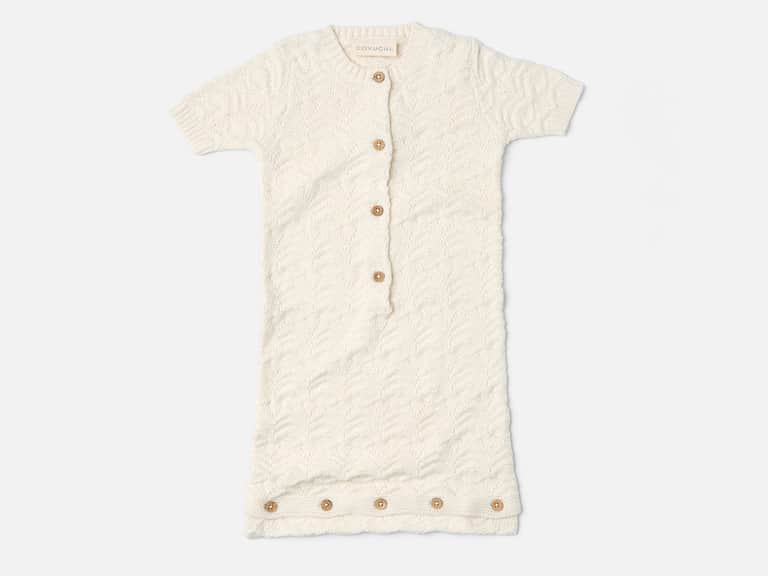
Regional textile traditions are not interchangeable, and no single account can stand for all of them. Climate, available breeds, trade routes, tools, and local needs shaped how wool was used. In some settings, dense woven cloth served as protection from wind and cold; elsewhere, wool yarns were worked into garments or household textiles with very different structures. The common thread is the careful matching of material and purpose.
A mattress topper brings that same question indoors: how should fiber be prepared and contained to make a useful layer? Carding helps create a more uniform filling; quilting can limit movement; a woven cover provides a boundary. These are not merely technical details. They are choices that translate the behavior of a raw material into a surface people encounter every day.
Learning to recognize those choices makes bedding labels more legible. Instead of asking only whether wool is traditional or natural, readers can ask what the wool is doing in this particular construction. Is it arranged as a springy fill? Is it held in place by stitching? Does the cover allow the layer to be maintained as intended? The answers connect the old knowledge of handling fibers with the practical decisions of a present-day household.
Care is part of performance
Maintenance instructions should be read before purchase, not after a spill. Wool toppers can differ considerably in their care requirements. Some may be designed for a specific washing method; others may call for spot cleaning, airing, or professional care. Never infer that a product is machine washable simply because wool can be washed under certain conditions. The finished item includes its cover, stitching, and filling, each of which may respond differently to water, heat, agitation, or drying.
Follow the maker’s directions exactly, including guidance on temperature, detergent, drying, and whether the topper should be removed from a cover before cleaning. Avoid adding routine treatments that the manufacturer does not recommend. If a topper is intended to be aired, choose a clean, dry, well-ventilated setting and protect it from prolonged exposure to harsh conditions. Care is not a contest to use the strongest cleaning method; it is a way of preserving the structure the product was made to have.
Ask what happens if the filling shifts, a seam opens, or the topper loses loft. Repair options, warranty terms, and the availability of replacement covers are useful parts of a product’s life story. Durability is not determined by fiber alone. It also reflects construction quality, the intensity of use, and whether the textile can be maintained without damaging its components.
A practical checklist for comparing toppers
When product descriptions use different language, a consistent set of questions can bring the comparison back to observable facts. Keep the mattress itself in view, and distinguish what is stated from what is assumed.
- Fiber: Is the filling wool, a wool blend, or another material? Is its source or processing described?
- Fill amount: Does the maker provide a fill weight, density, or other measure beyond finished thickness?
- Loft: Is the listed height measured for the finished topper, and is there information about how it compresses?
- Distribution: Is the filling quilted, stitched, or otherwise secured? How large are the sections?
- Cover: What is it made from, and how are seams and edges finished?
- Fit: Are dimensions and attachment details clear for the mattress you have?
- Care: Are cleaning and drying instructions specific and feasible for your household?
- Documentation: Can the maker clarify unclear claims about materials, certifications, or manufacturing?
Certifications may be useful when they apply to a specific part of a product, such as a fiber, fabric, or facility. Read what a certification covers rather than treating a label as a complete account of the topper’s performance. Similarly, phrases such as “natural,” “eco,” or “hypoallergenic” are broad. Ask what evidence, standard, or definition supports a claim, and avoid assuming that one property guarantees a particular sleep experience.
Choosing by feel, not by promise
Even a thorough description cannot predict every sleeper’s experience. Bodies differ in weight, temperature preference, sensitivity to pressure, and response to texture. If possible, review a clear return policy and trial terms before committing. In person, press the topper in more than one place and notice how quickly it recovers. Check whether the cover feels smooth or textured and whether the filling seems evenly distributed. A brief test will not reproduce a full night’s use, but it can reveal obvious differences in resilience and surface feel.
For online purchases, look for precise specifications, care instructions, and details about construction. Reviews may help identify recurring observations, but they should be read as individual accounts rather than universal evidence. The most informative product page is often the one that explains its limitations as clearly as its advantages.
The aim is not to find the thickest topper or the most romantic description of a fiber. It is to find a layer whose material, loft, and structure make sense for the mattress, the sleeper, and the household’s approach to care. Wool offers a distinctive combination of crimp, resilience, and moisture interaction, but those qualities become meaningful only when they are translated into a well-considered construction.
The clues beneath the surface
A mattress topper may be a modest object, but it holds an intricate account of textile decisions. Fiber determines the possibilities; density and loft shape the layer’s response; quilting and cover construction keep the system together. Care instructions reveal how the makers expect the object to live in a home. When these details are clear, the topper is easier to assess without relying on thickness alone.
Looking closely also offers a broader lesson in textile history: materials do not perform in isolation. People prepare them, combine them, and construct them for particular conditions. A wool filling that once belonged to a long tradition of carding and layering now sits beneath a sheet, responding to warmth and pressure in the quiet hours of sleep. Understanding that journey—from fiber to finished structure—makes a better-informed choice possible.